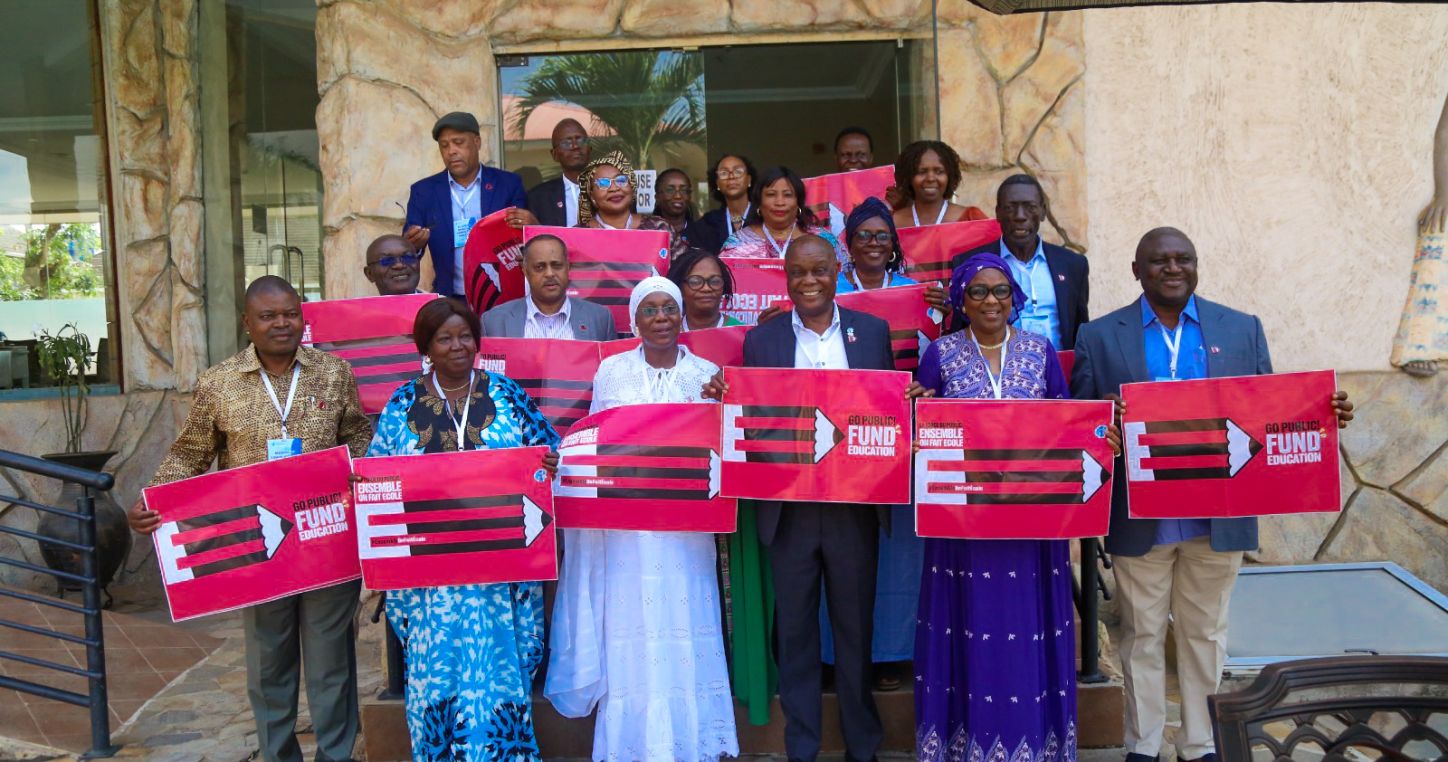
EI Africa Regional Committee Charts Course For Stronger Education Systems and Unions |Accra, Ghana, 28 October 2026
Members of the Education International Africa Regional Committee (EIARC) met in Accra, Ghana, to review regional progress, discuss the status of the teaching profession in Africa, and prepare for the 11th EI Africa Regional Conference.
The meeting brought together regional leaders to reflect on key education and trade union issues, including education financing, teacher shortages, attacks on education, early childhood education, and union renewal.
Solidarity and Investment in Education Remain Key Priorities
Opening the meeting, Mariama Chipkaou, Chairperson of the EI Africa Regional Committee, welcomed the Committee Members and commended member organisations for their commitment to advancing quality public education and defending the rights of educators across Africa.
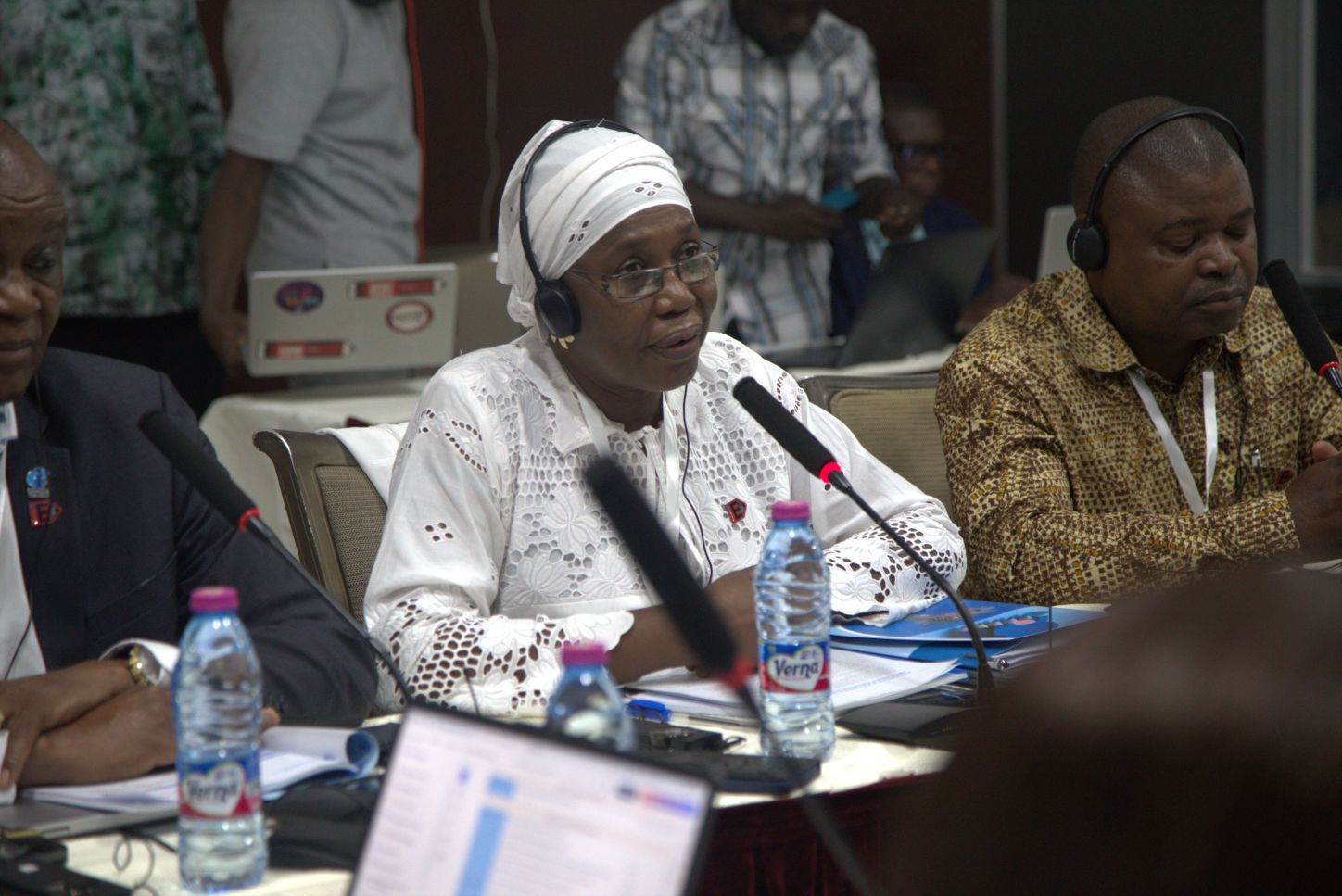
She highlighted the challenges facing education systems on the continent, including teacher shortages, inadequate investment in education, heavy workloads, and poor working conditions, particularly for early childhood educators.
“ Across the continent, educators continue to face heavy workloads and poor working conditions. Addressing these challenges requires solidarity and collective action,” she said.
Chipkaou reiterated the need for stronger advocacy for investment in teachers and public education and called on member organisations to remain united in advancing the region's priorities.
“The strength of EI Africa lies in our solidarity, our collective voice, and our unwavering commitment to justice, equality and quality public education,” she concluded.
Education as a Collective Responsibility
Addressing the Committee, David Edwards, General Secretary of Education International, reaffirmed EI's commitment to supporting African education unions and strengthening the teaching profession across the continent.
He commended the efforts and progress made by unions through the Go Public! Fund Education Campaign and encouraged members to continue building union
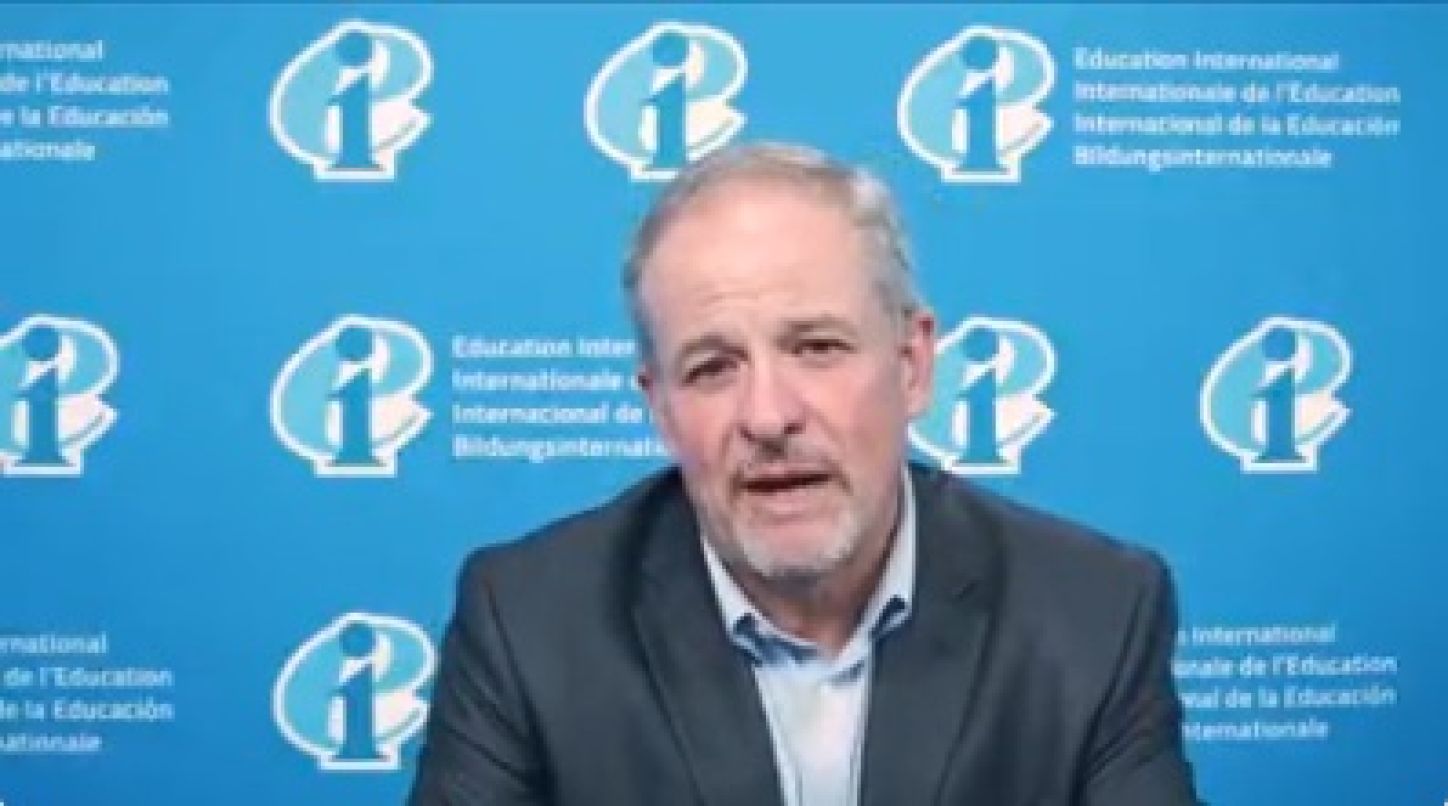
power.
Edwards expressed concern about the low remuneration of teachers and stressed that investments in teachers are a prerequisite for quality education.
He also warned about the increasing threats facing education in many countries.
Referring to EI Africa's research on Teachers and Schools under attack in Africa, Edwards underscored it significance, noting that " it is not only important for our advocacy for safe schools, it is important because for governments, it shows that our policies and demands are rooted and solidated, and we know what we are talking about."
The General Secretary highlighted the importance of protecting schools, learners, teachers, and education support personnel, noting that safe learning environments are essential to achieving quality public education for all.
The meeting also reflected on the findings of EI Africa's research on Teachers and Schools Under Attack, which documents growing threats against education institutions and education workers across the region.
Strong Public Education Needs Strong Unions
In his address, Mugwena Maluleke, President of Education International, called on unions to continue strengthening their collective power in defence of public education and educators' rights.
He noted that strong public education systems require strong unions capable of advocating for investment in education, decent work for educators, and social justice.
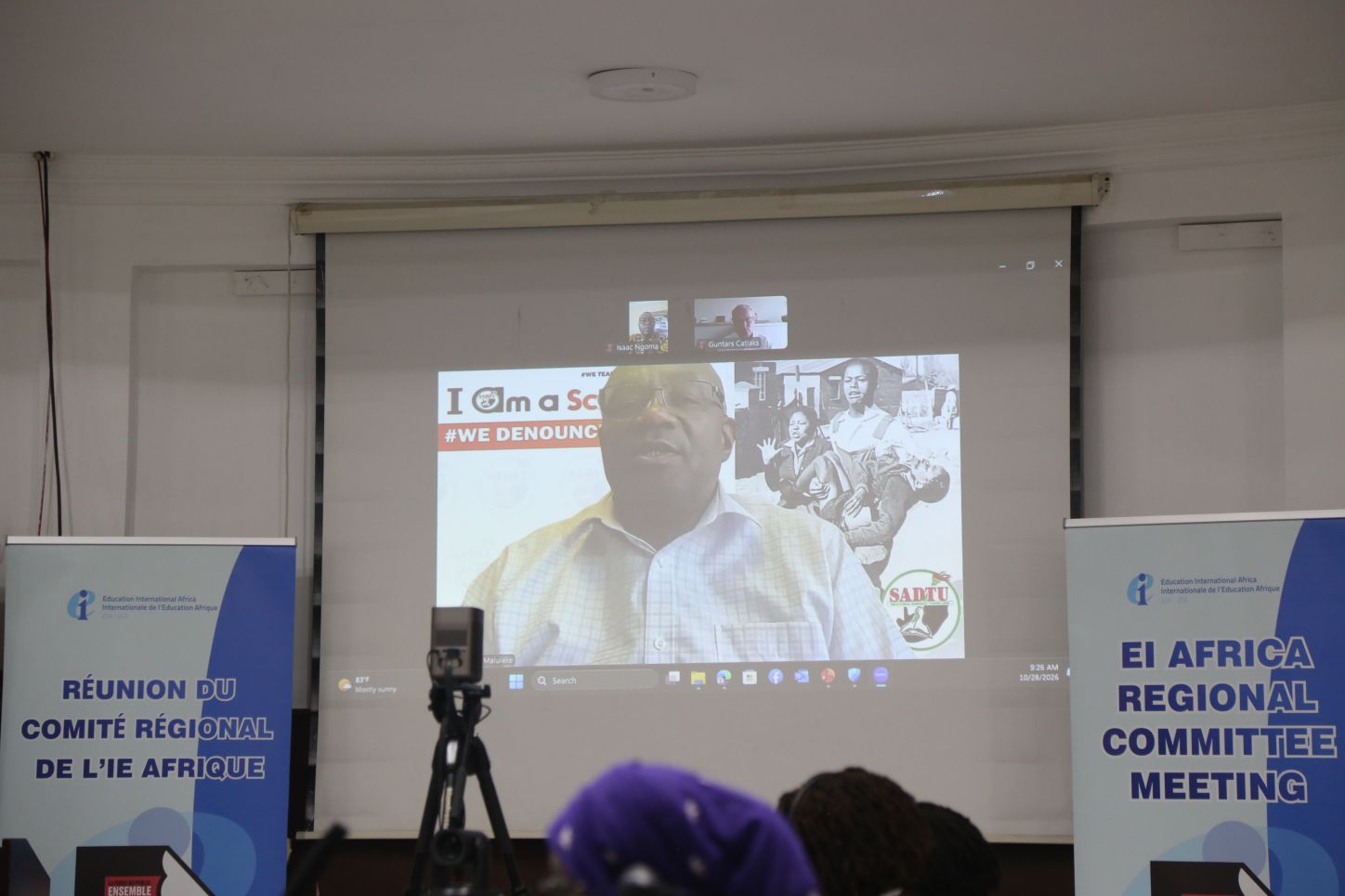
“We matter because our societies need strong public education systems. And public education systems need powerful unions to stand up for them, to strengthen and defend them.”
Maluleke further emphasised the importance of organising, youth participation, gender equality, and leadership development as part of efforts to build vibrant and sustainable unions.
Concluding his remarks, he urged the committee members to be guided by the spirit of Ubuntu.
“As we move forward, we must be guided by Ubuntu: ‘I am because we are.’ Ubuntu reminds us that education is not an individual pursuit, but a collective responsibility.”
The Committee Members also discussed regional priorities, investment in teachers, education financing, trade union rights, and preparations for the 11th EI Africa Regional Conference.
The meeting reaffirmed EI Africa's commitment to strengthening education unions, promoting quality public education, defending the rights of teachers and education support personnel, and ensuring safe and inclusive learning environments for all.